Fish Audio Voice Clone
Fish Audio Voice Clone — Reusable S2.1 Pro Voices from a Single Sample
Record one clean clip and Fish Audio S2.1 Pro turns your timbre into a reusable voice model — free enrollment, then every script, dub line, and ad read speaks in it with prosody speed control. Pay per use with credits, no subscription.
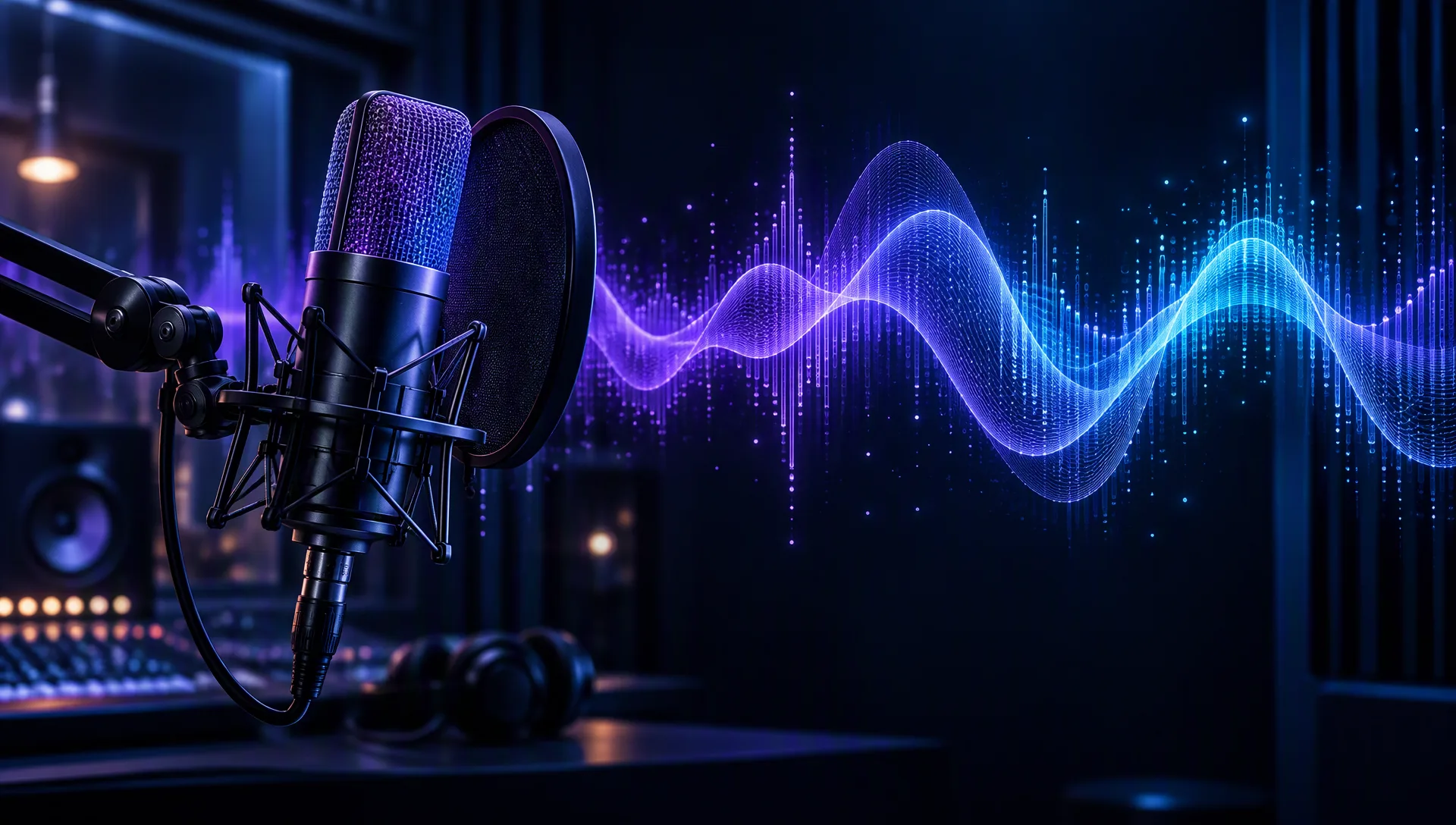
Prosody speed control
Set the pace on every run
One timbre, every language
Same voice, any supported language
Scripted performance
Intros, dubs, characters, ad reads
S2.1 Pro synthesis
Billed per use with Moosky credits
Reusable voice model
Enroll once, call it back anytime
Model Overview
Fish Audio Voice Clone
Fish Audio voice cloning turns one clean reference clip into a reusable voice model — enrollment is free, and S2.1 Pro synthesis bills per use with Moosky credits.
The details
The cloned timbre stays locked: pitch, texture, and delivery carry across scripts and languages, so a podcast intro, a dub line, and an ad read all sound like the same person, with speed control on every run.
Bring a recording to clone it; Fish Audio Voice Design invents a voice from a written description instead, and Fish Audio TTS only reads a script in a voice ID you already own.
Why use it on Moosky AI?
Model-specific controls with no subscription, clean outputs, and a workflow built for fast creative iteration.
Prosody speed control on every run
Set the reading pace per script and the cloned voice stays natural when it speeds up or slows down.
One timbre across every language
The enrolled model keeps your pitch and texture when it reads lines in other supported languages.
Built for scripted performance
Podcast intros, dub lines, character reads, and ad voiceover all speak from one reusable cloned identity.
Free cloning, credits for speech
Enrollment costs nothing; S2.1 Pro synthesis bills by script size against your Moosky credit balance.
How it works
Three focused steps from setup to finished output.
Credit-based
Simple, honest pricing
Uses Moosky credits with cost shown before you generate. No subscription required.
More from Moosky AI
Explore our full suite of AI tools.
Frequently Asked Questions
What audio sample do I need?
A clip with at least a few seconds of clear speech — a voice memo, a podcast take, or one scene of a video works. Longer uploads are trimmed automatically before enrollment, so pick your cleanest 10–20 seconds.
Is voice enrollment billed?
Creating the cloned voice model is free. You are billed for speech synthesis based on UTF-8 bytes of your script, with Moosky credits — no subscription, no GPU queue.
What is the difference between Fish Audio voice cloning and voice design?
Cloning learns the timbre of an existing voice from an audio sample you upload. Voice design instead builds a brand-new voice from a written description of age, tone, pacing, and accent, then saves it as a reusable voice ID. If you have a recording of the voice, clone it; if you are inventing one, design it.
Do I need this page if I only want to turn a script into speech?
No — that is Fish Audio TTS. It speaks any script in an existing built-in voice or a voice ID you already created here or in Voice Design. Cloning is only for turning a specific real voice into a reusable model first.
How is Fish Audio voice cloning different from CosyVoice cloning?
Both clone from a short sample with free enrollment, but they run different model families: Fish Audio pairs with S2.1 Pro synthesis for narration and character dialogue, while CosyVoice uses v3 Plus with near-instant enrollment and volume, rate, and pitch controls. Pick the engine whose delivery fits your script.
Can I control how fast the cloned Fish Audio voice reads?
Yes — S2.1 Pro pairs with prosody speed control, so you set the pace on each run and the cloned voice keeps its character when it speeds up or slows down. The same enrolled model also reads scripts in other languages without losing its timbre.
When should I use Fish Audio voice cloning?
Use Fish Audio when you want production S2.1-Pro quality with a reusable voice model for narration and character dialogue that stays consistent across every script and language.