Frame-by-frame craft, no craft store
AI stop motion animation with real puppet charm.
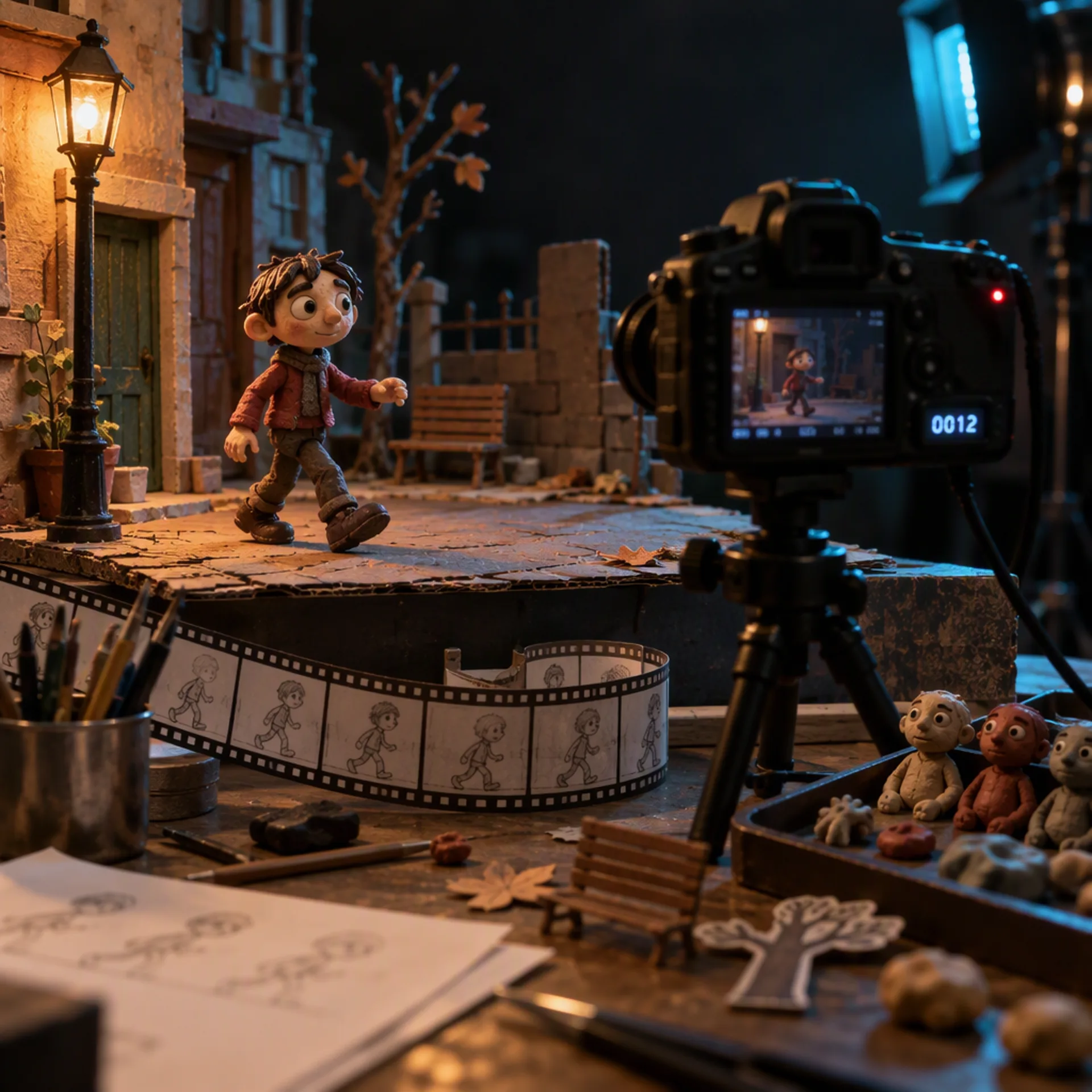
Describe the character, the set, and the story beat — the cinematic studio plans the scenes and renders them with that unmistakable frame-stepped cadence: clay-matte textures, miniature props, and motion that ticks forward one nudged pose at a time. No armatures, no sticky tack.

Brief the puppet
Character and world, text in
Stepped motion
Pose-to-pose ticking rhythm
Clay & felt sets
Tactile handmade textures
Locked references
Same hero every scene
Finished master
Voice, captions, end card
Model Overview
The stop-motion pipeline
Stop motion charms people because you can feel the hands: puppets that step instead of glide, sets you can almost touch, motion that ticks along one nudged pose at a time. Rebuilding that by hand means armatures, sticky feet, and a hundred adjustments per second of screen. Moosky's cinematic studio plays the whole craft virtually — describe the character and the world, and the Director plans the scenes, holds the subject as one locked reference, and renders it with that signature frame-stepped cadence.
Open the cinematic studioThe handmade look, on demand
Clay-matte skin, felt backdrops, visible thumbprints, and a miniature-set glow — the tactile grammar of stop motion, rendered from a plain text brief.
Stepped, not smoothed
Motion lands pose to pose with that classic ticking rhythm, instead of the buttery glide every generic video model produces.
Your hero stays on-model
Attach photos or a concept image once; the Director locks it as the reference, so the same puppet walks through every scene you approve.
Planned as a sequence
Scenes get story beats, angles, and props before anything renders — you edit the plan in chat, then commit credits to the takes you keep.
Voice and captions included
A studio or cloned announcer, burned or sidecar captions, and your end card are assembled in the pass — the export is post-ready.
Priced run by run
Each pass shows its credit price first; a take that fails refunds itself automatically, and unused balance carries to the next project.
Inside the frame loop
Each keeper arrives finished, not as a test clip: an announcer read, captions, and your closing card assemble in the same workspace, cut to the length and aspect you set at brief.
Every pass is a quoted run on one non-expiring credit balance, so you can audition a clay hero one week and a paper-cutout city the next without a new production budget.
Three jobs the puppet studio covers
One studio, three kinds of stop-motion run.
The same brief-to-frames flow covers a story film with a recurring hero, a product spot recast as a clay character, and a quick tactile clip for a social feed.
Story films
Follow one locked puppet through a planned arc — setup, trouble, payoff — assembled with pacing and an optional score.
Product mascots
Recast a bottle, box, or gadget as a clay hero acting out your offer inside a tiny handmade set.
Feed-ready clips
One tactile beat, thirty seconds or less, stepped and captioned for the scroll — quoted before it renders.
A miniature studio, not a prompt box
Subject lock, beat planning, stepped-motion rendering, and finishing passes in one workspace — so what downloads is a finished puppet-film master.
The ticking rhythm, built in
Renders hold the stepped timing that reads as hand-animated, so the result never looks like a smoothed-over generative clip.
Claymation feel without the clay
Matte skins, thumbprint texture, felt props, and miniature-set depth — the material story of a puppet film, authored entirely in a brief.
Bring your own subject
Upload a photo of a toy, a pet portrait, or a product, and the studio recasts it as the frame-stepped hero of its own tiny world.
Stories, not just clips
The cinematic playbook plans beats, angles, and props before any render — you approve the sequence in chat, exactly like a storyboard review.
Voiced, captioned, and cut to length
Announcer reads, burned-in captions, and your closing card land in the same pass, mixed around whatever audio the scene carries.
Sized for the shelf it lives on
Set length and aspect at brief — square for feeds, wide for the classroom screen — and the master renders to that one spec.
Credits, never retainers
Audition a hero on a cheap draft pass, then commit the hero render only to keepers. Nothing runs on a hunch, and failures refund themselves.
Re-take the drift, keep the rest
One scene wanders off-model? Re-run just that take as its own quoted audition pass — every approved scene stays locked, so a single bad frame never bills you for the whole set.
How it works
From idea to frame-stepped film in four steps
Brief the puppet world, approve the plan, audit the takes, export the finished master.
1. Brief the tiny world
Describe the character, the set, and the beat you want, or upload a photo to recast as the hero. The studio reads it as a production note, not a lone prompt.
2. Approve the scene plan
The cinematic Director drafts beats, angles, and props for every scene. Edit the sequence in chat until it reads like the film in your head — before credits are spent.
3. Nudge the takes
Scenes render with stepped, puppet-like timing against your locked reference. Re-take any frame that drifts off-model and audition alternates as separate quoted runs.
4. Assemble and export
The keeper takes get voiceover, captions, and your end card in the finish pass, then download the watermark-free master at the length and aspect you set.
Credit-based
Simple, honest pricing
Each pass is one quoted run in credits at 100 to the dollar — a finished stop-motion-style clip typically lands in the tens of dollars including its hero render, failed takes refund themselves automatically, and the balance never expires between projects.
More from Moosky AI
Explore our full suite of AI tools.
Frequently Asked Questions
What is AI stop motion animation?
It is stop-motion's visual language — stepped, pose-to-pose motion, clay or paper-craft textures, and miniature-set lighting — produced by a generative studio instead of a physical shoot. On Moosky you brief the character and the world in plain language, the cinematic Director plans the scenes, and each approved scene renders with that signature ticking cadence, assembled with voiceover and captions into one finished file.
Do I need clay, puppets, or a physical set?
No. The armature, the sticky feet, and the hundred nudges per second of screen are exactly what the studio replaces. You supply the idea and any reference photos; the handmade look is rendered, so a single person can ship what used to take an animator, a table build, and a locked room.
Can I make a claymation video from my own photos?
Yes — that is the fastest way in. Attach a picture of a toy, a product, or a pet portrait, and it becomes the locked hero reference; every scene the Director renders keeps that subject consistent, recast with clay-matte texture inside the tiny world you describe at brief.
Is stop motion better than a normal AI video for this?
It depends on the feeling you want. Generic video models glide, which suits landscapes and cinematic B-roll. The stepped, tactile stop-motion treatment reads as handmade and trustworthy — strong for mascots, kids' content, birthday invites, and brands that want warmth instead of gloss. Both live in the same studio, so the format is a choice at brief, not a second subscription.
How is this page different from the cinematic stories or Ghibli pages?
Three different treatments of the same director-led pipeline. The cinematic-stories page sells the live-action-style narrative film and its character continuity, and the Ghibli page sells the painterly anime look. This page owns the tactile frame-by-frame world — clay, felt, paper cutouts, and puppet-stepped motion — for any subject, story-driven or not.
Can AI stop motion videos be used for kids' parties or classrooms?
Yes. Birthday invitations, alphabet clips, classroom explainers, and bedtime shorts are common runs — the stepped craft look holds young attention, and the text-first process means a teacher or parent briefs it like an email. Export is watermark-free and sized to the screen or feed you name at brief.
How much does an AI stop motion animation cost?
Credits, quoted per run at 100 to the dollar. A finished short lands in the tens of dollars including its hero render, alternates and re-takes are separate quoted passes, and anything that fails to complete refunds itself automatically. Draft a scene cheaply first; spend the hero pass only on keepers.